
The drive home always feels the same. Your legs are heavy, your shoulders have locked up, and there is a low hum of fatigue sitting behind your eyes. You tell yourself you will stretch. Maybe you do. By Monday morning your lower back has its own opinion about the whole thing.
So you cycle through the usual fixes. A long hot shower that feels good for six minutes. Something from the medicine cabinet. An early bedtime that turns into three hours of staring at the ceiling because your body is tired but never quite settled. Southern Utah living is hard on a body in a way people do not always plan for. Dry air, big elevation swings, red rock trails that punish your knees, and summers that make afternoon movement a bad idea. The aches stop being an event and start being a pattern.
Heat helps. The trouble is most heat only reaches your skin. An infrared sauna works differently. Instead of cooking the air around you, infrared heaters send radiant warmth directly into your body, which is why so many homeowners across Hurricane, St. George and Cedar City are putting one in the garage, the spare room, or just off the back patio. Here is what that heat does, what the research supports, and how to get the most out of it.
What Sets Infrared Heat Apart From a Traditional Sauna
A traditional sauna heats a room. The stove warms the air to somewhere near 180 degrees or higher, and that hot air warms you from the outside in. It works, but the air itself is the delivery method, and plenty of people find breathing it uncomfortable after ten minutes.
Infrared skips that step. An infrared sauna uses infrared light to heat the body directly rather than warming the air around you, similar to the way sunlight warms your skin on a cool day, but without the ultraviolet exposure. The heaters themselves are the therapy. Most infrared cabins run between roughly 120°F and 150°F while still producing a strong sweat response.
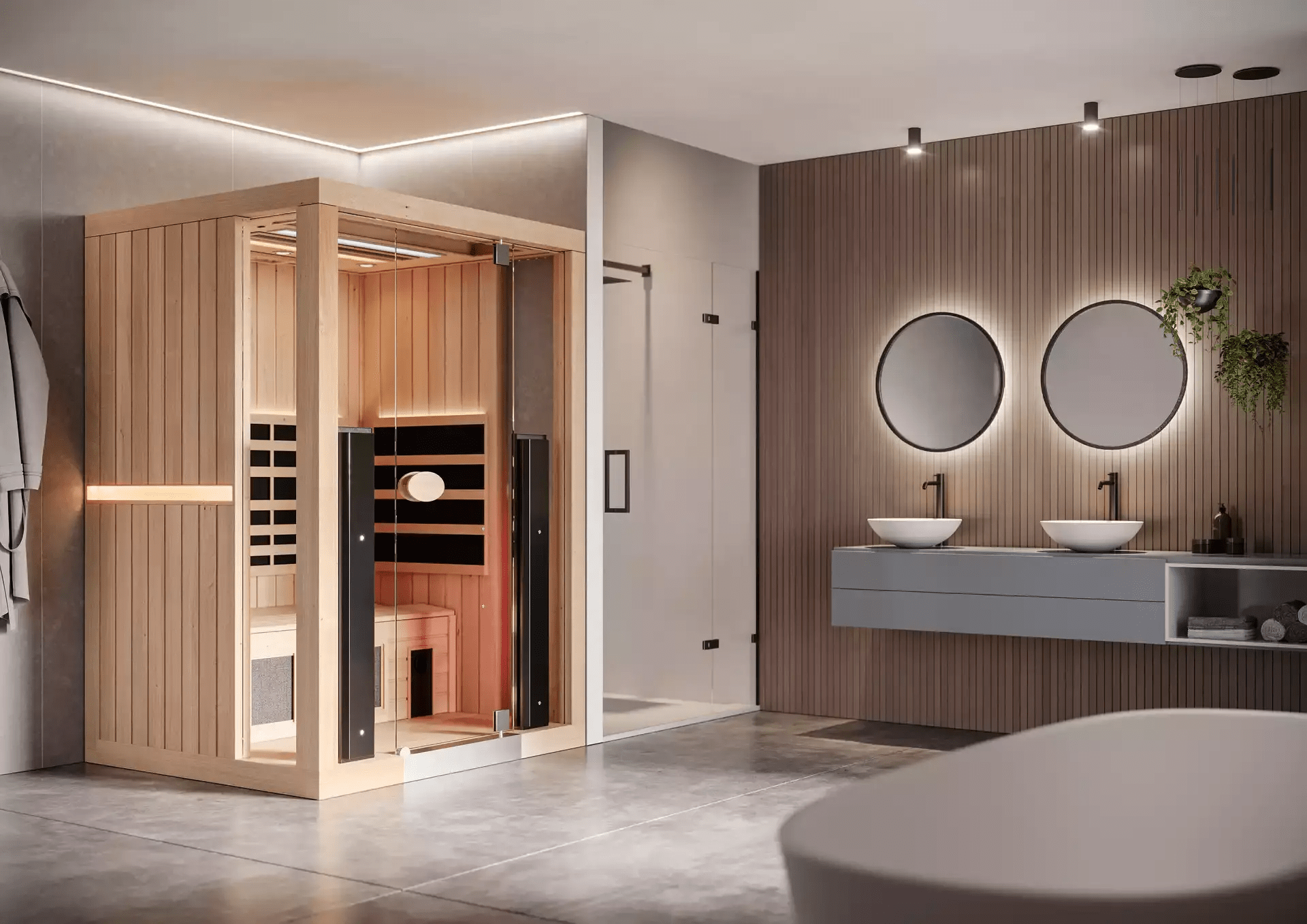
Jacuzzi® Infrared Saunas are built around low-EMF True Wave™ Carbon and Ceramic heaters that produce invisible far infrared heat. It is the same category of warmth the sun and your own body already generate. That distinction matters more than it sounds, because the comfort level is what determines whether you actually use the thing three times a week or twice a month.
Far, Mid and Near Infrared: What Each Wavelength Reaches
Not all infrared is the same, and this is where full spectrum cabins earn their keep.
Far infrared has the longest wavelength and reaches deepest. It is the workhorse behind core temperature rise and a heavy, cleansing sweat. Mid infrared sits in the middle and is generally associated with circulation and soft tissue warming. Near infrared has the shortest wavelength and stays closest to the surface, which is why it gets discussed alongside skin appearance.
The JS-2i uses full spectrum front-facing heaters that emit near, mid and far infrared together, so you are not choosing one benefit over another. The JS-1i and JS-3i follow the same approach in different footprints.
Why Lower Air Temperatures Make Longer Sessions Easier
Here is the practical upside of gentler air. A 20 to 30 minute session in an infrared cabin feels manageable in a way that the same stretch in a 190 degree room often does not. Your core temperature still climbs. You still sweat hard. You just do not spend the last five minutes negotiating with yourself about whether to open the door.
That tolerance is the whole game. Consistency drives results with heat therapy far more than intensity does, and a sauna you can sit in comfortably is a sauna you will keep using through February.
Muscle Recovery and Joint Relief After Hard Days Outside
This is the benefit most people notice first, and it comes down to blood flow. Research shows infrared heat increases circulation, which means more oxygen and nutrients moving toward tissue that needs repair, and more metabolic waste moving away from it.
Warm muscle is also more compliant muscle. Tight hamstrings and a locked-up upper back respond to deep warmth in a way they do not respond to a foam roller alone. Sit in the heat for 25 minutes and the stretch you do afterward goes further with less fighting.
Sore Legs After the Trail
If your weekends involve Gooseberry Mesa, the JEM Trail, Angels Landing or a winter day up at Brian Head, you already know the pattern. The soreness peaks 24 to 48 hours after the effort, not the night of. A sauna session the evening you get back, or the next afternoon, is where people report the most noticeable difference.
Red Rock Spas lists easing aches, pains and tension as one of the three core reasons homeowners buy a sauna. It is the one that comes up most on the showroom floor, particularly from people who have already tried everything else.
Everyday Stiffness and Range of Motion
The benefit is not only for weekend athletes. Some research suggests infrared sauna use may help reduce pain and stiffness, particularly for people managing conditions such as rheumatoid arthritis. One two-year study led researchers to describe infrared sauna therapy as a potentially promising approach for chronic pain.
That is measured language, and it should stay measured. Heat therapy is a support, not a cure. What it reliably offers is a daily window where movement hurts less, and for a lot of people that window is the difference between staying active and slowly giving it up.
Lower Stress, Steadier Mood and Deeper Sleep
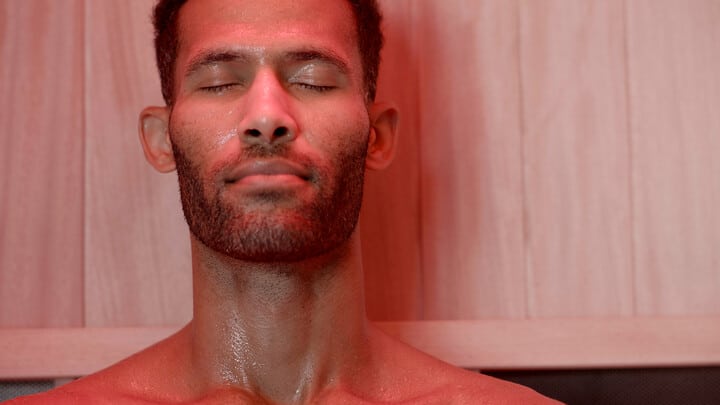
There is a reason nobody checks email in a sauna. For 25 minutes there is nothing to do, nowhere to be, and no screen bright enough to matter. The heat gives your nervous system permission to stand down, and that is half the benefit before any physiology enters the conversation.
The other half is real. Setting aside regular sauna time may help reduce stress, anxiety and low mood, and better sleep has also been linked to sauna use. Red Rock Spas puts the same two outcomes at the top of its sauna page: reduced stress, and better, more consistent sleep.
The sleep effect has a simple mechanism behind it. Your core temperature rises in the cabin, then drops once you step out, and that downward slope is one of the signals your body uses to move toward sleep. It mirrors the way a warm bath before bed works, just with more depth.
Building an Evening Routine That Sticks
Aim for 60 to 90 minutes before bed rather than immediately before. That gap gives your body time to cool and lets the drowsiness arrive naturally.
Keep it boring on purpose. Water, a towel, no phone. Some owners run the chromotherapy lighting low and leave the audio off entirely. Others use the Jacuzzi® Massage Chairs afterward for a second wind-down step. The specifics matter less than the repetition.
Circulation and What the Heart Research Shows
Infrared heat encourages blood vessels to widen, which increases circulation. Within minutes of sitting down, sweat appears, blood vessels dilate, blood flow rises and heart rate ticks up, a response one physician has described as physiologically similar to exercise.
The long-term evidence here is worth understanding properly. The most cited work comes from Finland, where a study published in JAMA Internal Medicine in 2015 followed 2,315 men for two decades and found cardiovascular mortality risk fell as sauna frequency rose. Those studies used traditional high-temperature Finnish saunas, though infrared cabins at lower air temperatures produce comparable increases in core temperature.
Being straight about this builds more trust than overselling it. As one physician at Northwestern Medicine puts it, the strongest long-term evidence comes from traditional saunas, while infrared saunas still show benefit in areas including chronic pain, blood pressure and musculoskeletal conditions. Regular sauna use has also been associated with reduced oxidative stress.
If circulation is your main reason for looking, the broader health benefits of hydrotherapy page is a good companion read, since warm water immersion works on the same system from a different angle.
Skin, Sweat and Living in a Dry Climate
Southern Utah does not make it easy to sweat productively. Perspiration evaporates off your skin before you notice it, and most people here are running mildly dehydrated without realizing. A sauna session produces a different kind of sweat: slow, heavy and sustained, the sort you feel on your forearms rather than the sort the wind takes away.
That deep sweat brings circulation toward the skin surface, which is the mechanism behind most of the skin-related claims you will read. Increased circulation carries nutrients toward the skin and supports cell renewal. Results vary a great deal between people, and anyone promising dramatic change is going too far.
What is not optional is rehydrating. A session can pull fluid levels down meaningfully, so bringing water in with you is standard advice, and drinks with electrolytes are a reasonable option. Alcohol and sauna use do not mix, and a rinse afterward is part of the routine. In a desert climate, treat hydration as part of the session rather than an afterthought.
Red Light and Chromotherapy Inside a Jacuzzi® Sauna
The JS series includes two overhead light bars delivering therapeutic red light and high-output chromotherapy, plus overhead LED reading lights. Red light therapy has its own body of research around skin and recovery, and having it built into the cabin means one session covers both.
Chromotherapy is more about atmosphere than physiology, and that is a fair thing to want. Cool blues for a morning session, warm amber before bed. It costs you nothing and it changes how the room feels.
Immune Support Heading Into Cold Season
Every year around late October, showroom conversations shift. People come in asking about saunas not for sore legs but because the whole household has been trading the same cough since school started.
There is evidence that regular sauna use can help you avoid the common cold, and saunas also reduce oxidative stress, which is associated with cardiovascular disease and degenerative conditions. The working theory involves the mild, controlled stress that heat exposure places on the body, and the adaptive response that follows.
It is a supporting player, not a shield. Sleep, movement and hydration still do the heavy lifting. But a sauna quietly improves all three of those, which may be the more honest explanation for why regular users report fewer sick days.
How Often to Use an Infrared Sauna for Real Results
Frequency is where most new owners get it wrong, usually by going too hard in week one and then avoiding the cabin for a fortnight.
Start low and slow. Around 110 degrees for five to ten minutes is a sensible opening, then build from there based on how you feel. Even experienced users are generally advised to keep sessions under 30 minutes and to limit visits to three or four times a week.
For most goals, three to five sessions weekly sits in the range the evidence supports, and daily use is considered safe for most healthy adults once they have adapted. The dose-response pattern in the Finnish data is the useful takeaway: regularity beats intensity, every time.
Session Length, Temperature and Hydration
A workable progression looks like this:
- Weeks 1 to 2: 15 to 20 minutes at 110°F to 120°F, three times weekly
- Weeks 3 to 4: 20 to 25 minutes at 120°F to 130°F
- Ongoing: 25 to 30 minutes at 130°F to 140°F, three to five times weekly
- Always: 16 to 24 oz of water before, the same again after
If you are not perspiring within 10 to 15 minutes, nudge the temperature up in five degree increments. Most people find using a sauna after exercise works better than before, since it supports recovery rather than pre-fatiguing the muscles.
Pairing a Sauna With a Hot Tub or Cold Plunge
A sauna is good on its own. Combined with water therapy, it becomes a full recovery setup without leaving the house.
Warm water and infrared heat do overlapping but not identical work. A Jacuzzi® hot tub adds buoyancy and targeted jet pressure, which is what you want for a specific knot in one shoulder. Infrared gives you whole-body depth with no water care to think about. Plenty of owners run both and choose based on the day.
Then there is cold. Red Rock Spas notes that alternating between cold and warm water, known as contrast therapy, can improve flexibility and reduce muscle soreness. The Kodiak Cold Plunge holds anywhere from 40°F to 104°F, so it handles both ends of that cycle from one tub.
A Simple Contrast Routine to Try
Start in the sauna for 15 to 20 minutes. Move to the cold plunge for one to three minutes. Return to the heat for another 10 to 15. Finish warm if you are heading to bed, or finish cold if you want to feel switched on for the rest of the day.
Build the tolerance gradually and skip the cold entirely if you have any heart or blood pressure concerns without clearing it first. If you are curious about that side of things, the cold plunge benefits guide for Utah homeowners goes deeper.
Choosing the Right Jacuzzi® Infrared Sauna for Your Home
Three cabins cover most households. The JS-1i seats one adult and suits a spare bedroom or a corner of a home gym. The JS-2i seats two and is the model most couples land on. The JS-3i seats three for families who want everyone in at once.
All three are built in mahogany with solid wood benches and a replaceable floor, plus a metal threshold and upgraded hinges designed for frequent use. The install gallery has real Southern Utah placements if you want to see how they sit in a finished space.
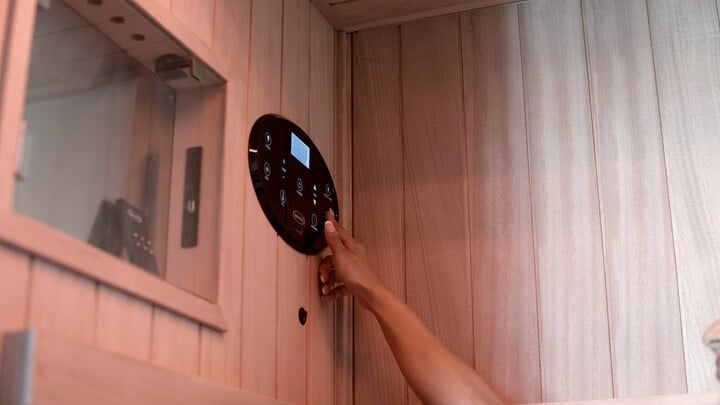
Controls come down to preference. A digital keypad handles temperature, time, lighting, heater intensity and reservation mode. The Jacuzzi Sauna Connect app does the same from a phone or tablet, which is genuinely useful for preheating on the drive home.
Space, Power and Placement
Measure twice. The JS-2i needs 54 inches wide by 50 inches deep exterior, standing 78 inches tall, so ceiling height is worth checking before anything else.
Power is the detail people miss. The JS-2i runs on 240V, 2,340W, 9.75A with a NEMA 6-15 plug, so a standard household outlet will not do it. Loop in an electrician early. Indoor placement is the norm: garages, basements, spare rooms and fully enclosed sunrooms all work well. A covered patio can work with the right protection, and that is a conversation to have with the team rather than a guess.

When to Check With Your Doctor First
Most healthy adults tolerate infrared heat without issue. Some people should get clearance first, and this is not the section to skim.
Talk to your physician before starting if you are pregnant, managing a heart condition, taking medication that affects blood pressure or sweating, or living with a condition that interferes with temperature regulation. That is standard guidance for anyone with underlying medical conditions, particularly heart-related ones.
Once you are in, listen to the signals. Dizziness, nausea or a headache means the session is over, no negotiation. Core temperature is not supposed to climb past roughly 103°F, and pushing past comfort is where trouble starts. Exit, cool down, rehydrate, and go shorter next time.
Frequently Asked Questions
How long before I notice any benefits?
Relaxation usually shows up during the first session. Sleep quality is often the next thing people mention, sometimes within the first week. Recovery and general wellbeing tend to become obvious after two to three weeks of consistent use at three or more sessions weekly.
Is an infrared sauna better than a traditional sauna?
They are different tools. Traditional saunas have the deeper long-term research base. Infrared cabins run at gentler air temperatures, which makes longer sessions far more comfortable and, for most people, easier to stick with. If the heat of a traditional sauna has put you off before, infrared is likely the better fit.
How many times a week should I use it?
Three to five sessions weekly is the range most guidance points to. Start with three, keep sessions short while your body adapts, then build. Daily use is considered safe for healthy adults once you are a month or so in, provided you stay on top of fluids.
Do infrared saunas help with weight loss?
Your body works to cool itself during a session, and heart rate rises. Most of the weight you see on the scale immediately afterward is fluid, and it returns once you rehydrate. Treat a sauna as something that supports recovery and consistency in your training, not as a substitute for it.
What does low EMF mean, and does it matter?
EMF refers to electromagnetic fields produced by the heating elements. Jacuzzi® saunas use an exclusive low EMF combination of mica and carbon far infrared heaters, which keeps exposure low while still delivering the heat you are there for. For buyers who have researched this topic, it is usually the first spec they ask about.
Can I put an infrared sauna outside in Southern Utah?
These cabins are built for indoor installation. A fully enclosed and protected space is what you want: garage, basement, home gym or sunroom. If a covered outdoor spot is the only option you have, bring it up with the team at your nearest showroom before you commit to anything.
Try One Before You Buy It
Reading about infrared heat is not the same as sitting in it. Twenty minutes in a cabin tells you more than any spec sheet will, and it is the fastest way to know whether the JS-1i, JS-2i or JS-3i is the right size for your space.
The team at Red Rock Spas has been helping Southern Utah homeowners sort this out for years, across showrooms in Hurricane, St. George, Cedar City, Washington, Vernal and Mesquite, NV. Same local service after the sale as before it.
Browse the full Jacuzzi® Infrared Sauna collection or contact us to book a visit. Bring your questions. Bring your sore shoulders too.